



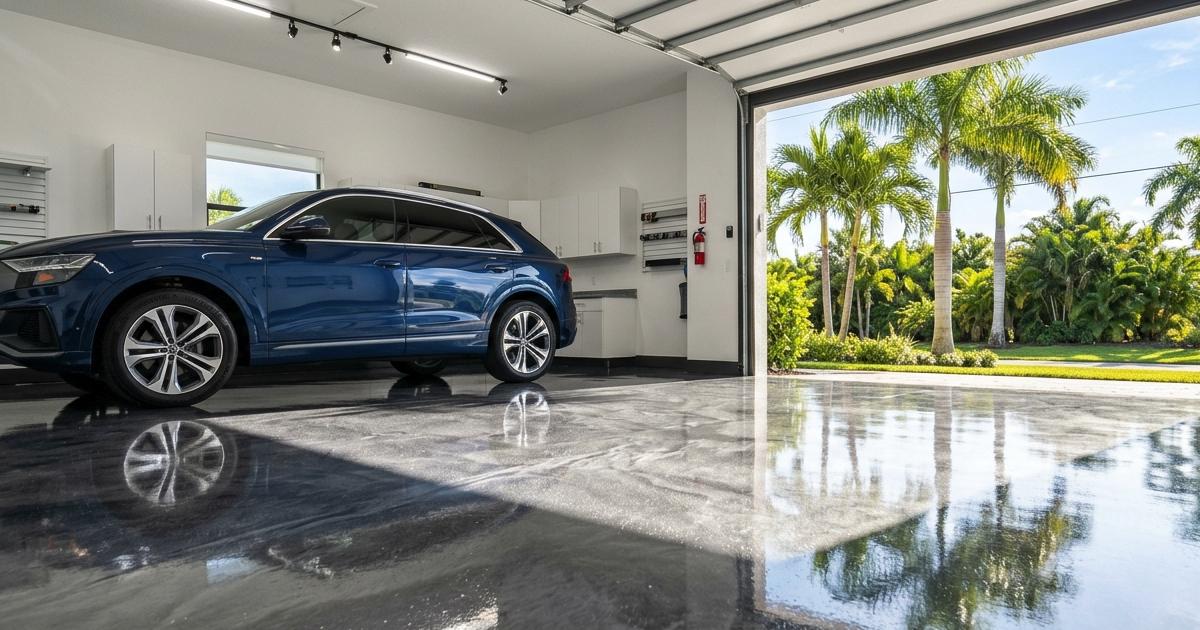

If you have been thinking about upgrading your garage floor in Cape Coral, you are not alone. Homeowners across Southwest Florida are discovering that a quality garage floor coating does a lot more than just look good. It protects your concrete from oil, moisture, and the kind of daily abuse that leaves bare slabs cracked and stained over time. At Florida Concrete Resurfacing, we work with Cape Coral homeowners regularly, and the questions we hear most often come down to the same handful of concerns: What type of coating is best? How long does it last in this climate? And what does the process actually look like?
This guide answers all of that in plain language, so you can make a confident decision about your garage floor epoxy in Cape Coral before anyone shows up at your door.
Why Cape Coral Garages Need More Than a Basic Coating
Cape Coral sits in one of the most demanding climates in the country for concrete. The combination of intense UV exposure, high humidity, salt air from the Gulf and surrounding canals, and extreme summer heat creates conditions that break down inferior coatings quickly. You have probably seen it yourself: a neighbor's garage floor that looked great for a year or two and then started peeling, bubbling, or turning yellow.
That is not just bad luck. It is usually the result of using the wrong product for the environment or skipping critical preparation steps. Bare concrete in a Cape Coral garage also tends to absorb moisture from below, especially during the rainy season, which can lift a coating right off the slab if the floor was not properly prepped and if the coating system was not designed to handle it.
The Salt Air Factor
Many Cape Coral properties are located near canals, the Caloosahatchee River, or close enough to the Gulf that salt air is a constant presence. Salt accelerates corrosion on metal and degrades certain coatings faster than inland environments. Choosing a coating system rated for coastal conditions is not optional here — it is essential.
Heat and UV Exposure
Garage doors in Southwest Florida face direct sun for hours every day. Even when closed, garage interiors heat up significantly. A coating that is not UV-stable will fade, chalk, and lose adhesion over time. Polyaspartic coatings, in particular, are formulated to resist UV yellowing, which is one reason they perform better in sunny climates than standard epoxy topcoats.
Epoxy vs. Polyaspartic: Which One Is Right for Your Cape Coral Garage?
This is the question we get most often, and the honest answer is that both have a place depending on your goals, timeline, and budget. Here is a straightforward breakdown.
Epoxy Coatings
Epoxy is a tried-and-true option that bonds well to concrete when the surface is properly prepared. It creates a hard, durable finish that resists chemicals, oil, and abrasion. Standard epoxy does have some limitations in Florida's climate, particularly around UV stability, which is why most professional systems use a polyaspartic or polyurethane topcoat over the epoxy base layer. This gives you the best of both worlds: strong adhesion and bond strength from the epoxy, and UV and chemical resistance from the topcoat.
Polyaspartic Coatings
Polyaspartic coatings cure faster than epoxy, which means a full garage floor installation can often be completed in a single day. They are also more flexible, which helps in environments with significant temperature swings. In Cape Coral, where garage floor temperatures can climb dramatically during the summer, that flexibility matters. Polyaspartic finishes are more UV-stable right out of the gate and hold their color better over time without a separate topcoat.
Neither product is magic on its own. The prep work underneath — specifically diamond grinding the concrete — makes the biggest difference in how long any coating lasts.
What the Installation Process Actually Looks Like
A lot of homeowners are surprised by how much work goes into a professional garage floor coating before a single drop of product hits the floor. Here is what a proper installation involves.
- Inspection and moisture testing: The slab is checked for cracks, spalling, and moisture vapor transmission before anything else happens.
- Diamond grinding: Industrial grinders open the concrete's surface profile so the coating can bond at a mechanical level, not just sit on top. This step is what separates a coating that lasts from one that peels.
- Crack and divot repair: Any significant cracks or damaged areas are filled and leveled before coating begins.
- Base coat application: The epoxy or polyaspartic base is applied evenly across the prepared surface.
- Decorative flake or color layer: Vinyl flakes are broadcast into the wet base coat for texture, slip resistance, and visual appeal. Solid colors or metallic effects are also options.
- Topcoat application: A clear UV-stable topcoat seals everything and provides the final level of durability and chemical resistance.
- Cure time: Light foot traffic is typically possible within 24 hours. Full cure for vehicle traffic usually takes a few days depending on the product and conditions.
How Long Does It Take?
Most standard two-car garage floor coatings in Cape Coral can be completed in one to two days. Polyaspartic systems tend to be faster. The size of the space, the condition of the existing concrete, and the complexity of the finish all affect the timeline.
How to Care for Your Coated Garage Floor
Once the coating is down, keeping it in good shape is straightforward. Sweep or dust-mop regularly to keep grit from scratching the surface. For spills, wipe them up promptly — most household chemicals and automotive fluids clean up easily from a quality coated floor. Avoid using harsh scrubbing pads or acidic cleaners, and place felt pads under heavy equipment stands to prevent point-load pressure over time.
When you have specific questions about your floor's maintenance, Florida Concrete Resurfacing is always available to walk you through what works best for your particular coating system.
Frequently Asked Questions
Can my existing garage floor be coated even if it has cracks?
In most cases, yes. Minor cracks can be repaired as part of the prep process before the coating is applied. Large structural cracks may need additional evaluation, but cosmetic cracking is very common in Florida slabs and is not usually a barrier to coating.
Will the coating peel if my garage gets really hot in the summer?
A properly installed coating using quality products designed for Florida conditions should not peel from heat alone. The most common cause of peeling is poor surface preparation or moisture in the slab, not heat by itself. That is why diamond grinding and moisture testing are so important before any product goes down.
How soon can I park my car on the floor after coating?
This varies by product, but most professional-grade systems allow vehicle traffic within 24 to 72 hours after the final topcoat is applied. Your installer should give you a specific timeline based on the products used and the conditions on install day.
Ready to Get Started?
A coated garage floor is one of the most practical upgrades a Cape Coral homeowner can make. It protects your investment, makes the space easier to clean, and holds up against everything the Florida climate throws at it — as long as the job is done right. Contact Florida Concrete Resurfacing today at (239) 710-2299 or visit flconcreteresurfacing.com to schedule your free estimate. We serve Cape Coral and all of Southwest Florida, including Fort Myers, Naples, Bonita Springs, Estero, Lehigh Acres, and Punta Gorda.