



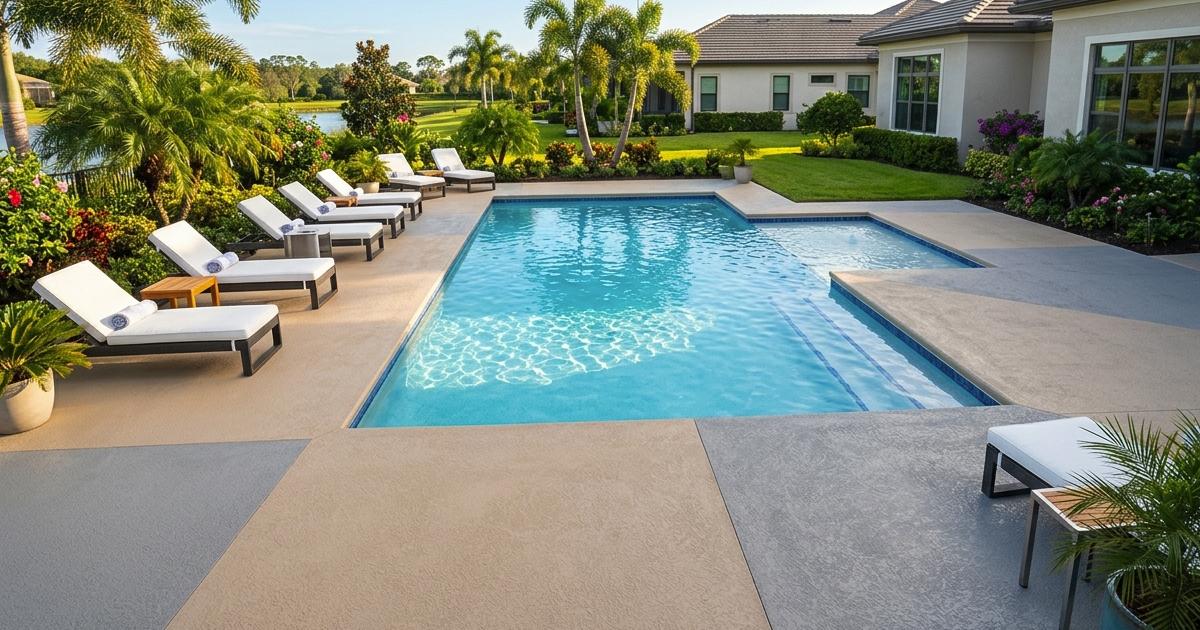

If your pool deck in Naples is looking worn, stained, or just plain tired, you are not alone. The combination of intense Florida sun, chlorine splash, bare feet, and tropical rainstorms puts pool decks through a beating that decks in most other parts of the country simply never face. Florida Concrete Resurfacing works with Naples homeowners regularly to bring cracked, faded, and slippery pool decks back to life with decorative concrete overlays and resurfacing systems built specifically for this climate.
This guide covers what pool deck resurfacing actually involves, which coating systems hold up best in Southwest Florida, and what questions you should be asking before any work begins.
Why Naples Pool Decks Deteriorate Faster Than You Expect
Naples gets more sun exposure per year than most U.S. cities, and that UV radiation breaks down surface finishes over time. Add high humidity, salt air drifting in from the Gulf, and the thermal expansion that comes with concrete baking in ninety-degree heat all summer, and you have a recipe for surface wear that catches homeowners off guard.
The most common problems we see on Naples pool decks include:
- Surface spalling where the top layer flakes away in small chips
- Hairline cracks that widen over time from heat expansion and contraction
- Slippery surfaces that become a safety hazard when wet
- Faded or uneven color from UV bleaching
- Efflorescence, the white powdery residue that forms when moisture pushes up through the slab
- Staining from tanning oils, fertilizers, algae, and pool chemicals
Most of these issues are not signs that the slab itself is failing. They are surface problems, and that means resurfacing is usually a far more practical and affordable solution than tearing out and replacing the concrete.
Pool Deck Resurfacing Naples: What Are Your Options?
When it comes to resurfacing a pool deck in Naples, the goal is always the same: a surface that looks great, stays cool underfoot, provides traction when wet, and holds up to years of Florida weather. There are a few different systems that work well depending on your existing surface condition and what you want the finished product to look like.
Decorative Concrete Overlays
A concrete overlay is a thin layer of polymer-modified cement applied directly over your existing deck. It bonds to the old surface, fills in minor imperfections, and gives you a fresh canvas that can be textured, colored, and sealed. Overlays are popular in Naples because they can mimic the look of natural stone, travertine, or tile without the grout lines that trap dirt and grow mold in humid conditions.
Knockdown and Spray Textures
A knockdown texture finish is one of the most practical choices for pool decks in Southwest Florida. The texture is created by applying a base coat and then using a trowel to knock down raised peaks in the material, leaving a slightly uneven surface that grips wet feet without being uncomfortably rough. It dries to a matte finish that stays cooler than smooth concrete under the Naples sun.
Stamped Concrete Overlays
If you want a higher-end look, a stamped overlay can replicate the appearance of brick, slate, or large-format stone patterns. These are sealed with a UV-resistant topcoat that protects the color and keeps the surface from absorbing moisture. Stamped overlays add real visual value to outdoor living spaces and work especially well for Naples homes where the pool area connects to an outdoor kitchen or entertainment space.
Cool Deck and Cementitious Coatings
Some Naples homeowners ask specifically about products designed to reduce surface temperature. Certain cementitious coatings are formulated to reflect more heat than standard concrete and can make walking barefoot on a sun-baked deck noticeably more comfortable during peak summer months.
What the Resurfacing Process Actually Looks Like
Before any overlay or coating goes down, the existing surface has to be properly prepared. This is the part that separates a coating that lasts years from one that peels up in months.
Surface Preparation
The deck is cleaned thoroughly to remove algae, oils, and any prior sealer that could prevent adhesion. Cracks and divots are repaired with a compatible filler material. Depending on the condition of the surface, mechanical preparation such as grinding or scarifying may be used to open up the concrete and give the overlay a solid surface to grip.
Application and Curing
The overlay or coating system is applied in stages. Color, texture, and any decorative patterns are worked in at the appropriate stage. A UV-resistant sealer goes on as a final coat to protect everything underneath. Cure times vary by product and weather conditions. In Naples, summer heat can actually speed up some stages, but the crew needs to manage application temperature carefully to avoid premature drying that causes cracking.
Florida Concrete Resurfacing takes the prep work seriously because we know that a beautiful finish means nothing if it starts peeling before the year is out. Proper preparation is the foundation of a coating that lasts.
How to Keep Your Resurfaced Pool Deck Looking Good
Resurfaced concrete is not maintenance-free, but it is low maintenance when you follow a few basic habits:
- Rinse the deck regularly to remove chlorine, sunscreen, and debris before they stain the sealer
- Avoid dragging metal furniture across the surface, which can scratch the topcoat
- Reapply sealer on a schedule appropriate to your specific coating system
- Address any new cracks promptly before water works its way underneath
- Use a pH-neutral cleaner for scrubbing rather than acidic or bleach-based products
Frequently Asked Questions
How long does pool deck resurfacing last in Naples?
That depends on the product used, the quality of the prep work, and how the deck is maintained. A well-applied overlay with proper sealing can last many years in Florida conditions. The biggest factor is preparation. A surface that was not properly cleaned or profiled will fail early regardless of the coating quality.
Can you resurface a pool deck that has cracks?
Minor surface cracks can usually be filled and resurfaced successfully. Structural cracks that are actively moving or widen significantly with temperature changes are a different situation and need to be evaluated individually. A professional site visit is the only reliable way to assess what your specific deck needs.
Do I need to drain the pool for deck resurfacing?
Typically no, as long as the work stays on the deck surface itself and does not involve the pool coping or interior finish. The pool edge will be masked and protected during work. Your contractor should walk you through exactly what precautions will be taken before the job starts.
If your Naples pool deck is due for a refresh, reach out to Florida Concrete Resurfacing for an honest assessment and a free estimate. Call us at (239) 710-2299 or visit flconcreteresurfacing.com to get started. We serve Naples, Cape Coral, Fort Myers, Bonita Springs, Estero, Lehigh Acres, Punta Gorda, and the surrounding Southwest Florida area.