



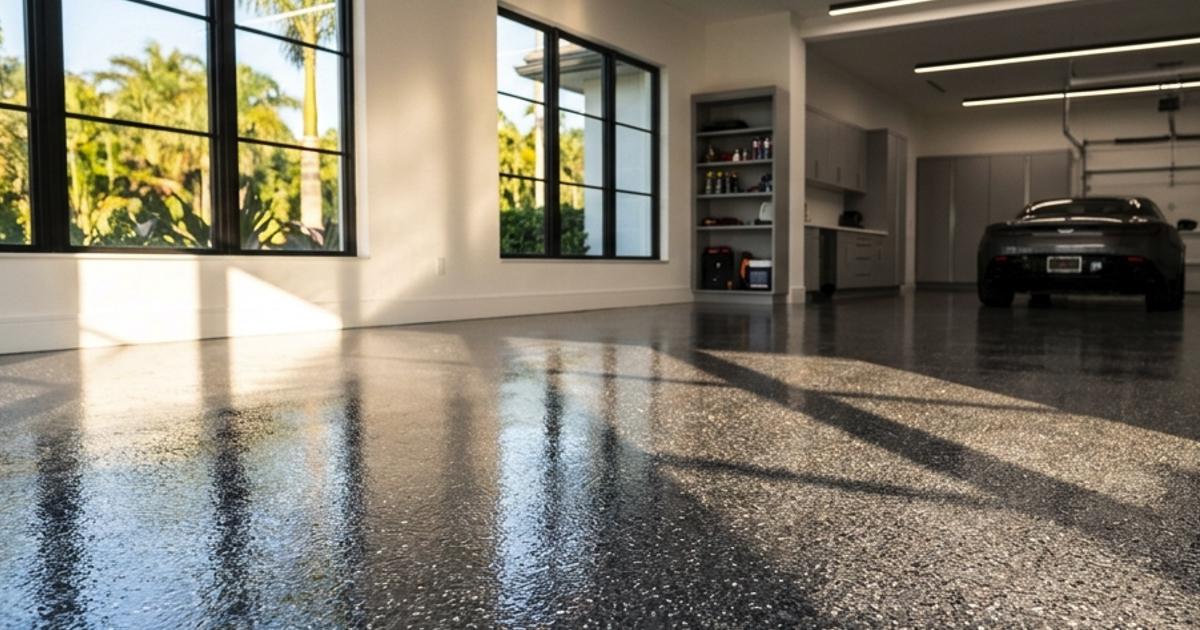

Why Bonita Springs Homeowners Are Switching to Polyaspartic Floor Coatings
If you have been thinking about upgrading your garage floor in Bonita Springs, you have probably come across two main options: epoxy and polyaspartic. Both are solid choices, but polyaspartic floor coatings Bonita Springs homeowners are asking about more and more — and for good reason. The Florida climate throws some serious challenges at concrete floors, and polyaspartic holds up exceptionally well in our heat, humidity, and intense UV exposure. At Florida Concrete Resurfacing, we work with both systems, and we want to give you an honest look at what polyaspartic actually is, how it compares to traditional epoxy, and whether it makes sense for your home or business.
What Is Polyaspartic, and How Is It Different from Epoxy?
Polyaspartic is a type of aliphatic polyurea coating — which is a fancy way of saying it is a more advanced, flexible polymer than standard epoxy. Both coatings bond to concrete and protect it, but they behave differently in a few important ways.
Cure Time
One of the biggest practical differences is how fast polyaspartic cures. Epoxy typically needs 24 to 72 hours before you can walk on it and even longer before you can drive on it. Polyaspartic can be ready for foot traffic in just a few hours and for vehicles in as little as 24 hours. For busy households or commercial properties in Bonita Springs, that faster turnaround is a real advantage.
UV Stability
Standard epoxy yellows over time when exposed to sunlight. Anyone who has had an epoxy garage floor in Florida for a few years has probably noticed that amber tint developing, especially near the door. Polyaspartic is UV stable, meaning it resists that yellowing and holds its color much longer. In a sun-drenched area like Bonita Springs, that matters more than it would in a northern climate.
Temperature Flexibility
Polyaspartic can be applied in a wider range of temperatures and even in higher humidity than epoxy. This makes it more practical for Florida's climate, where scheduling a coating project during perfect weather is not always realistic. That said, proper prep work is still essential no matter which product you use.
The Florida Climate Factor: Why It Changes Everything
Living in Southwest Florida is wonderful, but it creates unique challenges for concrete floors. The combination of high heat, persistent humidity, salt air from the Gulf, and occasional moisture pushing up through concrete slabs from the ground below can accelerate the failure of inferior coatings. Bonita Springs sits right in the middle of that environment.
Moisture vapor transmission — when water vapor moves up through a concrete slab — is one of the most common reasons coatings peel or bubble in Florida. If a coating is applied without properly addressing moisture levels in the slab, it will not last, no matter how premium the product is. This is why surface preparation and moisture testing before any coating job are non-negotiable steps, not optional add-ons.
Polyaspartic coatings tend to be more flexible than rigid epoxy systems, which helps them handle the minor expansion and contraction that happens in Florida's heat cycles without cracking or delaminating as quickly.
What Polyaspartic Floor Coatings Work Best For
Polyaspartic is a versatile system that works well in a variety of settings. Here are the most common applications where it really shines in the Bonita Springs area:
- Residential garages — especially where UV exposure through garage doors is high
- Lanais and covered patios — where heat and humidity are constant factors
- Commercial showroom floors — where a fast return to service is essential
- Retail spaces — where downtime is costly and durability is critical
- Workshop and hobby spaces — where chemical spills and abrasion are concerns
- Light industrial areas — where a tough, cleanable surface is needed without a multi-day cure
Polyaspartic can also be combined with decorative flake or quartz broadcast systems to give you a floor that looks great while still delivering serious performance. The flake systems are especially popular in garages because they hide minor imperfections, add texture for slip resistance, and give the floor a clean, finished look.
What to Expect from Florida Concrete Resurfacing on Installation Day
The process for a polyaspartic floor coating starts well before any product hits the ground. Proper preparation is what separates a coating that lasts from one that peels up in a year or two.
Surface Preparation
Diamond grinding is the standard method for opening up the concrete surface so the coating can bond properly. This is not optional. Acid etching alone is rarely sufficient for Florida slabs, particularly older ones or those with any previous coating. Grinding removes weak surface layers, opens the concrete pores, and creates the mechanical profile the coating needs to grip.
Crack and Patch Repairs
Any cracks, spalls, or divots in the concrete are filled and repaired before coating. Coating over unrepaired damage just traps the problem underneath and the coating will fail at those spots.
Application and Cure
Once the surface is prepped, the base coat goes down, followed by the decorative layer if applicable, and then a clear topcoat for protection. With polyaspartic, the process moves quickly, and in most cases a garage floor can be completed in a single day with a short cure time before use.
Is Polyaspartic Worth the Investment?
Polyaspartic systems typically cost more than basic epoxy, and that is a fair thing to consider. But in the Florida climate, where UV exposure and moisture can shorten the life of lower-grade coatings significantly, the durability and color stability of polyaspartic often make it the smarter long-term value. You spend more upfront, but you are not redoing the floor in three or four years.
That said, every situation is different. A quality epoxy system installed correctly with proper prep can also perform very well for many years. The right choice depends on your specific floor, your goals, and your budget. The best thing you can do is have a professional evaluate your slab and talk through the options with you honestly.
Frequently Asked Questions
How long does polyaspartic floor coating last in Florida?
With proper preparation and regular maintenance, a polyaspartic floor coating can last many years even in Florida's demanding climate. UV stability and moisture resistance are key factors in its longevity here compared to standard epoxy.
Can polyaspartic be applied over an existing epoxy floor?
In some cases, yes, but it depends on the condition of the existing coating. If the epoxy is peeling, delaminating, or has moisture issues underneath, the old coating typically needs to be removed before applying a new system. A proper inspection is the only way to know for sure.
Does polyaspartic work on outdoor concrete in Bonita Springs?
Polyaspartic is a good option for covered outdoor areas like lanais and patios because of its UV stability and flexibility. For fully exposed outdoor surfaces, specific exterior-rated systems are usually recommended. It is worth discussing your specific situation with a professional before choosing a product.
Get a Free Estimate on Polyaspartic Floor Coatings in Bonita Springs
If you are ready to upgrade your garage, patio, or commercial floor and want honest advice on the best coating system for your specific situation, reach out to Florida Concrete Resurfacing. We serve Bonita Springs and all of Southwest Florida, including Cape Coral, Fort Myers, Naples, Estero, Lehigh Acres, and Punta Gorda. Call us at (239) 710-2299 or visit flconcreteresurfacing.com to schedule your free on-site estimate. We will take a look at your concrete, answer your questions honestly, and help you choose the right solution for your home or business.